Can a neighborhood-funded pot of money keep South Dallas sunny?

News Based on facts, either observed and verified directly by the reporter, or reported and verified from knowledgeable sources.
The area’s first public improvement district brought few improvements and broke public trust. Proponents of the proposed Sunny South Dallas PID promise more transparency, stricter oversight and better results.

Here’s the gist:
- Two years after neighbors halted the renewal of their public improvement district (PID), resident and developer Scottie Smith II proposed a new iteration: the Sunny South Dallas PID.
- The financial burden on homeowners was a pain point with the former PID, but the PID website states any residential property owners with a homestead exemption also would be exempt from PID fees.
- Dallas PIDs assess annual fees of up to 15 cents per $100 of a property’s value for a defined area, with a board of property owners allocating funds to improvements such as lighting, landscaping and public safety.
- Smith’s proposed Sunny South Dallas PID includes roughly 1,375 parcels totaling 7 million square feet and would yield $900,000 annually, he estimates.
- The leaders of Pointe South, the group that led the charge to end the former PID, still largely oppose Smith’s proposed version, based on poor implementation and mismanagement the last time around.
- The City of Dallas says it can account for most of the “missing” funds from the former PID, and that a lack of strong neighborhood-led management was at fault in its failure.
- Smith is making changes to the PID proposal based on community feedback. The new deadline to collect petition signatures from half of property owners is Feb. 1, 2027, a process he says will begin this summer.
Well-lit streets, cohesive landscaping, enhanced patrols promoting public safety — such amenities around Dallas often are a result of property owners joining to turn their section of the city into a Public Improvement District (PID).
Landowners inside PID boundaries pay an annual fee (no more than 15 cents per $100 of their property’s value), and the pot funds communal improvements.
PIDs in Dallas have enjoyed near blanket success, with one exception — the original South Dallas Fair Park PID, which was the first PID in Dallas to be pulled from consideration for renewal due to lack of community support, and the only to become entangled in a bribery investigation. Its dissolution left 13 active PIDs.
Real estate developer and recent South Dallas Fair Park Area Plan Taskforce chair Scottie Smith II, who has owned properties in South Dallas for more than a decade, is spearheading the effort to form a brand new PID that would encompass much of the former PID territory, plus a few hundred additional parcels including, if things go his way, the City-owned Fair Park.
But past experience leaves some property owners wondering if Smith’s proposed Sunny South Dallas PID is a good fit for their neighborhood.

Our reporting approach:
We’ve covered public improvement districts (PID) in South Dallas since 2020, the year we launched and began reporting on the original South Dallas Fair Park PID and neighbors’ questions around it. We followed up when several neighbors organized to keep the City of Dallas from renewing that PID. So when Scottie Smith II proposed the new Sunny South Dallas PID, we gave neighbors an overview and our plan for continued reporting on it. This piece is the result.
Do you have questions about how and why Dallas Free Press chooses stories to report? Send us any questions or concerns.
The role of homeowners in Dallas PIDs
PIDs primarily focus on improving commercial corridors and mixed-use areas (though there are examples, such as Prestonwood in North Dallas, of successful residential PIDs). The ratio of residential to commercial properties within Dallas’ PIDs, in general, vary by district since PID overlays are tailored to specific neighborhood needs.
In South Dallas, several residential streets have been included in PID boundaries, both past and proposed. The typically high-value homes on said streets make up a small portion of the proposed special district, but weighty implications accompany their inclusion.
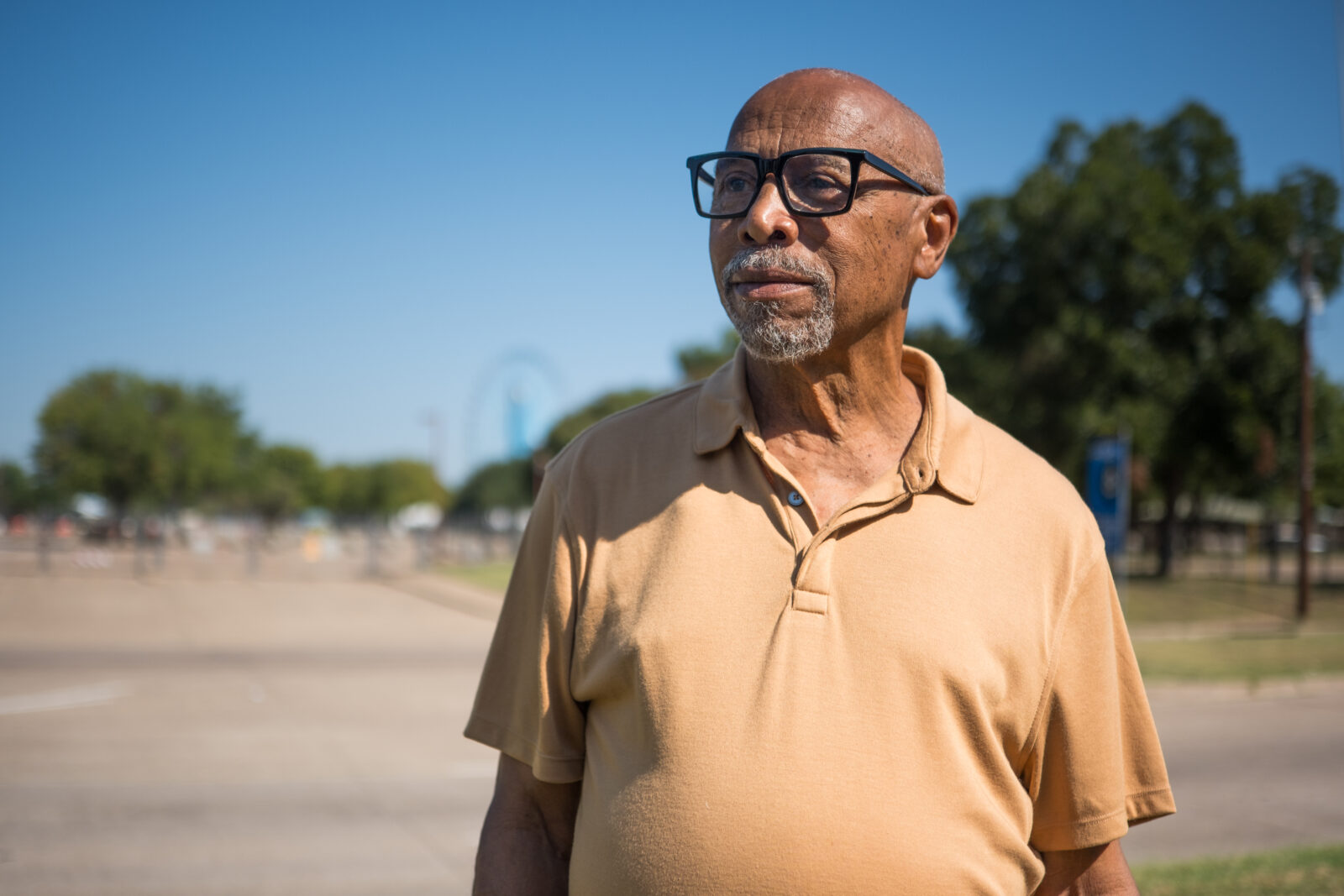
“I’m not anti-PID, just this one as proposed,” says Hank Lawson, who owns a house on Park Row, one of those residential streets within the PIDs both then and today.
Lawson led the effort to stop renewal of the previous PID. Every PID must apply for renewal at seven years. He was upset that, as he saw it, the eastern end of the PID saw the greatest and fastest-increasing valuations and paid a higher PID assessment each year, while the bulk of budget expenditures benefitted the western portion of the PID district.
Lawson has spoken often about the lack of return he received on his investment. “It felt like taxation without representation, like paying taxes for no services,” he says.
His home’s value increased 64 percent, from $252,110 in 2020 to $413,950 in 2022, all while the first PID was active. That meant Lawson’s $378 PID payment rose to $620.93 by 2022.
Average property values on his street increased from $261,700 in 2018 (when the first PID was formed) to $447,700 in 2023, according to Zillow estimates, which equates to a respective annual PID payment increase of about $392 to about $672 during the same period.
“They were taking our money, but for years none of us [homeowners] ever heard from the administrator,” Lawson says. “Not until they wanted to get an expansion and renewal.”
A number of the 630 property owners in the original PID did not even realize they were in a special district, paying hundreds of additional dollars come tax time, until the petition to renew the PID came in the mail. (PID assessments in Dallas are commonly bundled into a monthly mortgage payment and collected by the county tax office, along with standard property taxes.)
“It said that by signing this petition, you agree to the assessment, and then that’s when I started connecting the dots,” the Rev. Al Green told the Dallas Free Press in 2023.
Homestead exemption = no PID assessment?
Lawson says that when Smith set out to draw boundaries of the new proposed Sunny South Dallas PID he spoke to several commercial property owners to see whether he had their support. Yet, to Lawson’s knowledge, Smith didn’t approach any residential owners at that time.
We weren’t able to ask Smith about this because he declined to be interviewed for this article. He launched a website, hosted a series of community meetings, and even agreed to a point-counterpoint forum at the December gathering of the Pointe South Business Group, which Lawson founded and co-leads. Dallas Free Press attended that gathering, as well as two other community meetings Smith hosted late last year.
But when we texted Smith in January to see how the PID meetings went and ask about next steps, including any “objections you might be hearing and how you’re responding to those,” he replied, “What objections?” then said, “The real focus should be on the positive side. This year I will not be entertaining articles or interviews that have a negative spin.”
While the original South Dallas/Fair Park PID was primarily a business corridor, the residential properties within its boundaries were concentrated along six streets in two neighborhoods — the South Boulevard-Park Row Historic District and the more recently developed Fair Park Estates.
The Sunny South Dallas PID expands the boundaries to also encompass the 30-block Jeffries-Meyers neighborhood, a subdivision of homes being developed by Smith and others.
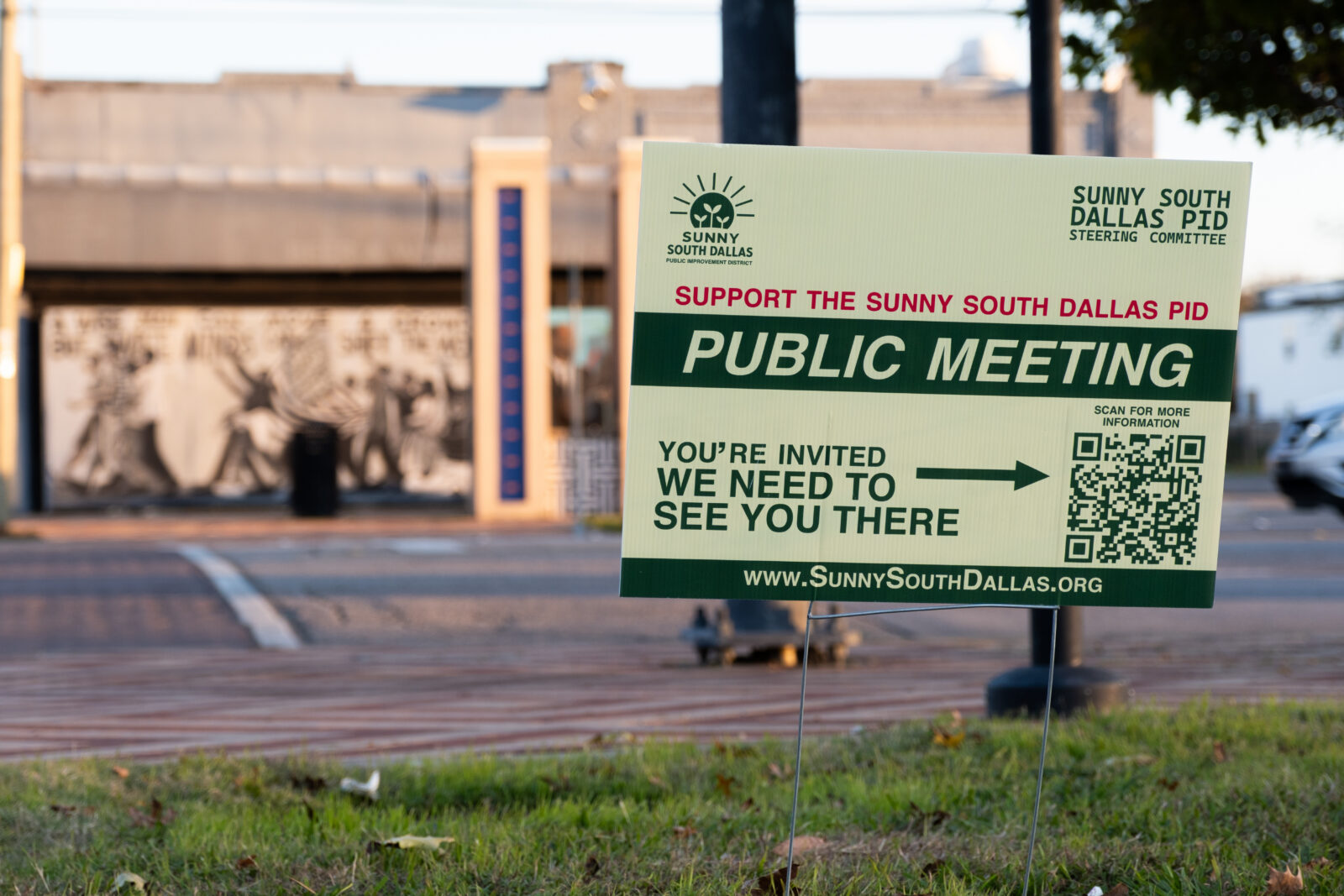
One major difference between the original and proposed PIDs appears to be how residential homeowners will pay into them. According to the FAQs and the assessment calculator on Smith’s Sunny South Dallas PID website, they won’t — anyone with a homestead exemption or a 65 and older exemption will be exempt from PID payments, too.
Starting over: A new PID for South Dallas
The South Dallas Fair Park neighborhood has a history of segregation and neglect and continues to deal with residual unique situations when it comes to poverty, infrastructure and crime. At December’s Pointe South PID forum, Lawson did not mince words when posing his question:
“Has a PID ever succeeded in a neighborhood as poor and crime-infested as ours?”
City of Dallas PID coordinator Lacy Ruiz attempted to respond, citing her time working with PIDs in Fort Worth, but Lawson interrupted her, saying he cares about Dallas, not Fort Worth.
The City’s Office of Economic Development, when we repeated Lawson’s question by email (the only way the office will answer questions) said, “Numerous factors may impact how services are delivered in a PID, including but not limited to community needs, PID funding levels and organizational maturity.”
In short, “no.” But during the charged forum, Ruiz managed to say, “You have to start somewhere.”
“PIDs are one of the most powerful mechanisms available when it comes to revitalizing an area while keeping change in the hands of those who live and operate there,” Smith insisted to attendees.
Hosting a public information meeting is one of many requirements of anyone applying for a PID. Smith held six last fall and said in a recent email newsletter he will hold more this year, now that the Sunny South Dallas PID service plan is being “refined based on feedback, current conditions, and input collected.”
Smith fulfilled another obligation when he tapped a trusted neighborhood nonprofit, Forest Forward, to manage the proposed PID. If the City Council approves it, Forest Forward would have to adhere to the City’s list of mandates, including holding at least one annual meeting with property owners, submitting quarterly progress and financial reports, submitting a proposed annual service plan for City Council approval, and meeting the City’s required insurance coverage.

In order to begin the PID process, Smith needs to submit supportive signatures from at least half of all property owners within the boundaries, along with a $15,000 filing fee. He had hoped to collect those signatures by the City’s annual Feb. 1 deadline for new and renewing PIDs; now that deadline moves to Feb. 1, 2027, with a potential PID launching in 2028.
Though Smith declined an interview for this article, he told Dallas Free Press executive director Keri Mitchell in December why he is going to great lengths to establish the improvement district now.
“We’re at a really, really interesting point in South Dallas, and knowing the amount of development coming over here that I have wind of, coming up and down the MLK corridor, I’m afraid there’s not going to be a way for the community to benefit from that. We’ve seen it before where development came extremely quickly, and then people started getting displaced.”
Former Dallas City Councilmember Diane Ragsdale, lifelong South Dallas resident and founder of nonprofit Innercity Community Development Corporation, spoke favorably at the second of Smith’s December PID information sessions as an economic development tool.
She suggests looking to the Ferguson Road Initiative as an example of what a well-run PID can accomplish.
The Ferguson Road Initiative in Far East Dallas has invested in libraries, parks, recreation centers and neighborhood programs, and curbed violent crime by 60%, according to its latest impact report. It recently spawned the Far East Dallas PID to apply similar efforts to even more land.
Yet other South Dallas landowners who, like Smith, want improvement and inclusion, do not believe the PID is the correct vehicle to achieve it.
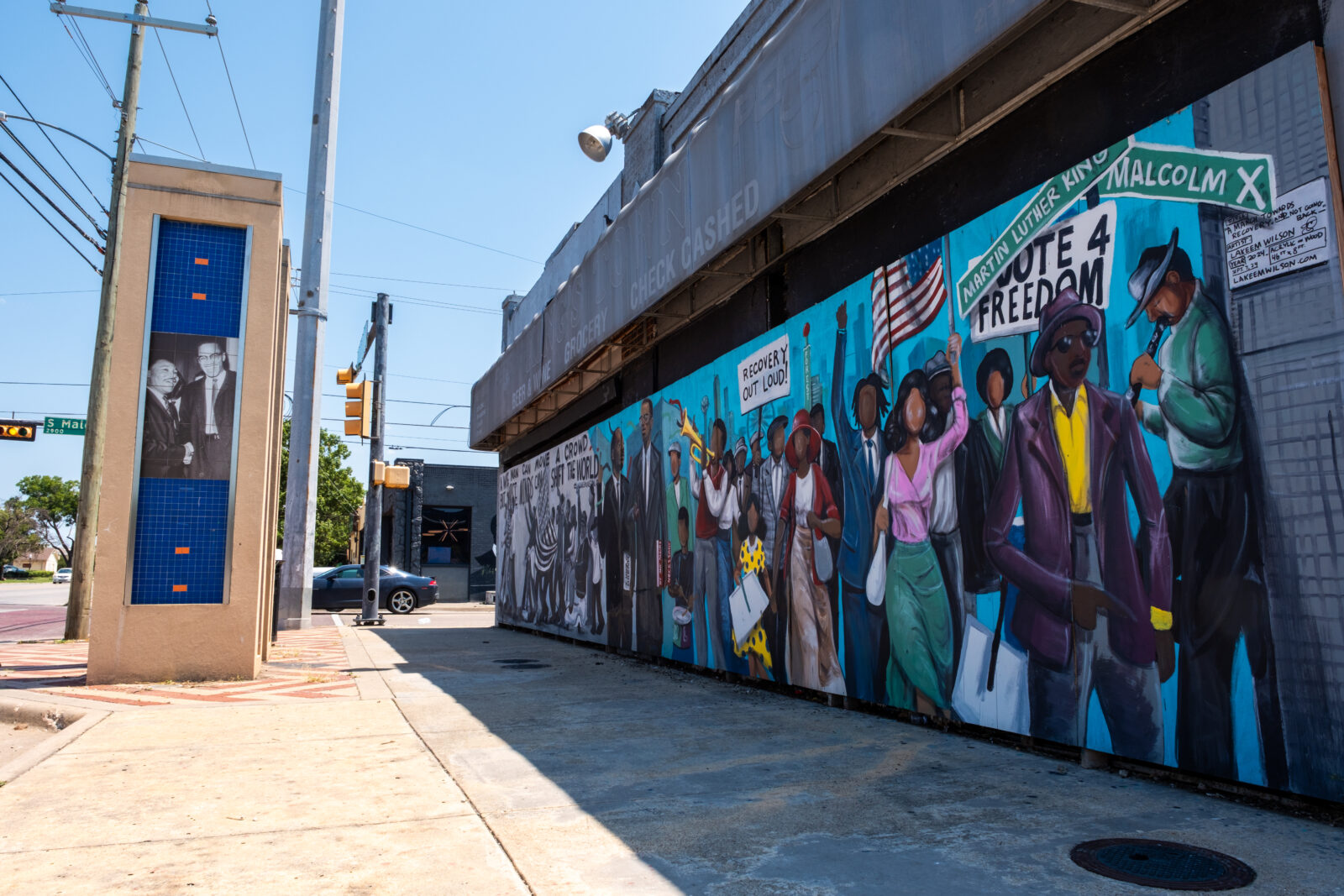
Hasani Burton owns Kemet Media at the corner of Martin Luther King Jr. and Malcolm X boulevards, where he is planning to rent spaces to artists and other creators. He is generally supportive of the City’s economic stimulus programs, serves on the board of a Tax Increment Finance (TIF) District and has utilized the South Dallas Fair Park Opportunity Fund, he says. But he is not in favor of Smith’s proposed PID.
Burton says he can achieve more improvement to his property using money he has raised, grants, and other tools than he would by paying into a PID and awaiting prospective improvements that might come down the line.
He also told Smith at one of the PID information sessions that he was involved with the South Dallas economic group that preceded the first PID and had several properties within the former PID. The experience, he said, convinced him of the inadequacy of PIDs when it comes to police responsiveness, “getting authorities to enforce criminal trespass affidavits on commercial properties … or addressing the problem of mental illness and issues that contribute to people living on the streets,” among other things.
“The only thing a PID will ultimately do is take hard-earned money from businesses and residences and put it into the hands of a board to decide what they’re going to do with it,” he said. “If we’re making money or we’re doing something, we should be able to take that money and put it toward the things that we want to put it toward, not toward somebody else to manage it.”
Despite his wishes, Burton — who’s served on Community Housing Development, the Landmark Commission, Preservation Dallas, the Mayor’s Task Force on Poverty, and the Public Art Committee, to name a few — says he expects the new PID to move forward.
“I’ve been at every meeting. This has the support” of South Dallas City Councilmember Adam Bazaldua, Burton says. “I’ve learned to prepare for the worst and hope for the best. The worst in this case is we get a PID, and then we do our best with it.”
Bazaldua and his council liaison did not reply to a request for comment before the deadline.

Past PID problems in South Dallas
“What was is not what is,” Scottie Smith told attendees at the second of two December PID information sessions. Still, past outcomes have soured the improvement district idea for some.
The boundaries were different, but the proposed PID includes many of the same properties as the original PID. That first one was authorized by the Dallas City Council in August 2016 for a seven-year term that began Jan. 1, 2017. The City assigned the nonprofit Alliance for Greater Works to manage the fund, and they awarded the management contract to Hip Hop Government (HHG).
Questions arose about the management after they reported a lack of funds before the first year’s end. Hip Hop Government’s president, Jeremy “Jay” Scroggins, in 2019 pled guilty to funneling bribery payments from developer Ruel M. Hamilton to late Dallas City Councilmember Carolyn Rhea Davis.

Right: A map shows the proposed boundaries of the Sunny South Dallas Public Improvement District. The district would be bordered by north of Interstate 30, Washington Street to the east, Pennsylvania Avenue and Fitzhugh Avenue to the south, and Botham Jean Boulevard to the west. Map from Sunny South Side PID.
Years later, in response to our questions for this story, the City’s Office of Economic Development says it can account for most of the $95,811 collected from property owners in 2017, noting that HHG spent $91,811 on “security patrol services, trash/litter pick up, marketing/promotion, and district administration.”
Partway through 2017, HHG discontinued services due to a lack of funds remaining. The City terminated the management contract with HHG effective Oct. 25, 2017 “due to insurance deficiencies,” according to the economic development office.
Despite the City’s more recent explanation of what happened to the majority of those first-years’ funds, damage to the PID program’s reputation in South Dallas was done. The Dallas Observer in 2019 reported that HHG disappeared with the entire fund — and the reported loss of almost $100,000, even if not accurate, and the bribery scandal is what most opponents remember.
The group that manages the Cedars neighborhood’s successful South Side PID, South Side Quarter (an arm of real estate developers Matthews Southwest) assumed responsibility for the original PID and continued collecting property owners’ PID payments. They showed in a 2020 report that funds collected after HHG’s departure were reinvested in the form of landscaping, trash pickup, public art and courtesy patrols. South Side Quarter continued to collect assessments and, as required by PID policy, carry out council-approved service plans until the dissolution of the original PID in 2023.
Largely in response to South Dallas residents concerned about mismanagement and the lack of transparency they’d witnessed, Dallas City Council in January 2025 amended its PID policy to implement what they call “additional good governance and transparency requirements.” The amendments mandated that boards be composed of members from within the PID boundaries, and added stricter petition thresholds, capped administrative expenses at 15% of the total budget, and established clear, searchable procedures for annual service plans.
Additional amendments have been made at the state level. For example, in 2021, House Bill 1543 amended the way PID notifications are shared with potential buyers. Any person “who proposes to sell or otherwise convey real property” is required to inform a prospective buyer if the property lies within a public improvement district. Buyers must be informed of the PID before signing the contract.
Further, the economic development office states by email that “dedicated staff provide oversight of each PID to ensure funds are being utilized in compliance with the PID’s service plan, the City’s PID Policy, the City’s PID management contract, and Chapter 372 of the Local Government Code.”

Government-owned properties a big ‘if’ for PIDs
If the petition moves forward and Dallas City Council approves the PID, everyone who owns property within the district would pay an additional annual assessment of 15 cents per $100 of property value. For example, a property appraised at $300,000 would pay an additional $450 into the PID annually.
The Sunny South Dallas PID website poses the question: “Who pays into the PID?” and answers: “Only non-homestead properties contribute to the PID. This includes commercial properties, multifamily developments, investor-owned residential properties, and vacant land. Tax-exempt properties are not assessed unless they voluntarily choose to participate.”
Smith’s map shows the proposed PID encompassing stretches of Al Lipscomb Way, Martin Luther King Jr. Boulevard, South Fitzhugh Avenue and Robert B. Cullum Boulevard. It includes roughly 1,375 parcels in South Dallas totaling 7 million square feet and $375.95 million in property value.
The map also shows Fair Park as part of the PID. But that is a best-case scenario. City-owned properties such as Fair Park and close to 50 additional City-owned parcels of land within the PID boundaries are not subject to PID assessment, according to the Office of Economic Development.
Assessment of City-owned property in the proposed PID would require amendment of the City’s PID policy and City Council approval, they say.
The Sunny South Dallas PID assessment for all City-owned accounts including Fair Park would be approximately $71,000 based on 2025 tax data and the proposed assessment rate of 15 cents per $100 valuation, the office estimates. Smith said at a December meeting that the budget estimates he handed out and shared at sunnysouthdallas.com did not include Fair Park.

Purchasing ‘public safety’
Nearly half of the proposed PID budget (47.6%) is dedicated to public safety and community outreach, Smith told attendees at the December Pointe South meeting.
But what is considered “public safety” spending? To Smith and other PID proponents, it means appropriating funds to the Dallas Police Department’s “Enhanced Neighborhood Patrol program, safety programs, homeless outreach and lighting enhancements,” according to the website.
Neighborhood leaders like Lawson spoke up with different ideas.
“Don’t come out here and talk about public safety, because that’s been a failure,” Lawson said. “We don’t need criminalization — we need support services for addiction and homelessness. That’s what we need, not more police.”
PID coordinator Lacy Ruiz responded, saying that inclusion of those kinds of services would be possible.
“I agree with you, but what it comes down to is management and investment of the dollars, what and how those decisions are made and where it goes,” she said to Lawson. “And so I think what failed the PID last time and what caused disruption is how the dollars were invested. It was just poorly managed. It failed. And I think if we move forward with the PID, what is most important is the management of the dollars and where it’s invested.”
In order to move forward, the Sunny South Dallas PID has to secure a majority of landowners’ support by Feb. 1, 2027. The deadline, recently extended by one year, allows more time for receiving and incorporating feedback into a detailed service plan, organizers said in a newsletter.
Updates to the proposal and more information can be found at sunnysouthdallaspid.com.
What neighbors can do next:
- Attend the information session on Monday, March 31 at 6 p.m. The location will be announced on the Sunny South Dallas PID website.
- Calculate your annual PID assessment, if you live within the proposed boundaries.
- Volunteer to join the PID steering committee, which will “help guide the development” and “ensure that the process reflects the priorities and voices of the community.”
Share This Story, Choose Your Platform!