City of Dallas seeks community input on the South Dallas Fair Park Area Plan


Almost 100 residents gathered at the Martin Luther King Jr. Recreation Center gymnasium this month to express their concerns and opinions on the South Dallas Fair Park Area Plan. The meeting was the first of three hosted by the City of Dallas Planning and Development Department.
City Council approved the new area plan in June to guide future development in the South Dallas neighborhood. The plan’s goals are to encourage the growth of small business and welcome new development by creating mixed-use corridors, and simultaneously to minimize displacement of current residents by formalizing residential design standards so that new construction resembles the neighborhood’s historic homes.
The purpose of the authorized hearing process and the series of public meetings is “to explore how to implement the land use and zoning recommendations” from the area plan, the City’s website states, as well as to ensure that “future zoning aligns with the community’s adopted vision” for everything from neighborhood character to infrastructure improvements to gentrification and revitalization. All three meetings will present different information, according to the department.
Scottie Smith II, who chaired the South Dallas Fair Park Area Plan Task Force, encourages neighbors who want to get involved to attend the meetings and to express ideas or any concerns on the future development of their community.
“Your presence is important, your voice is important,” Smith says. “We cannot change things once they’re adopted and once things are moving forward, [so] bring your voice to those meetings and let them be heard.”
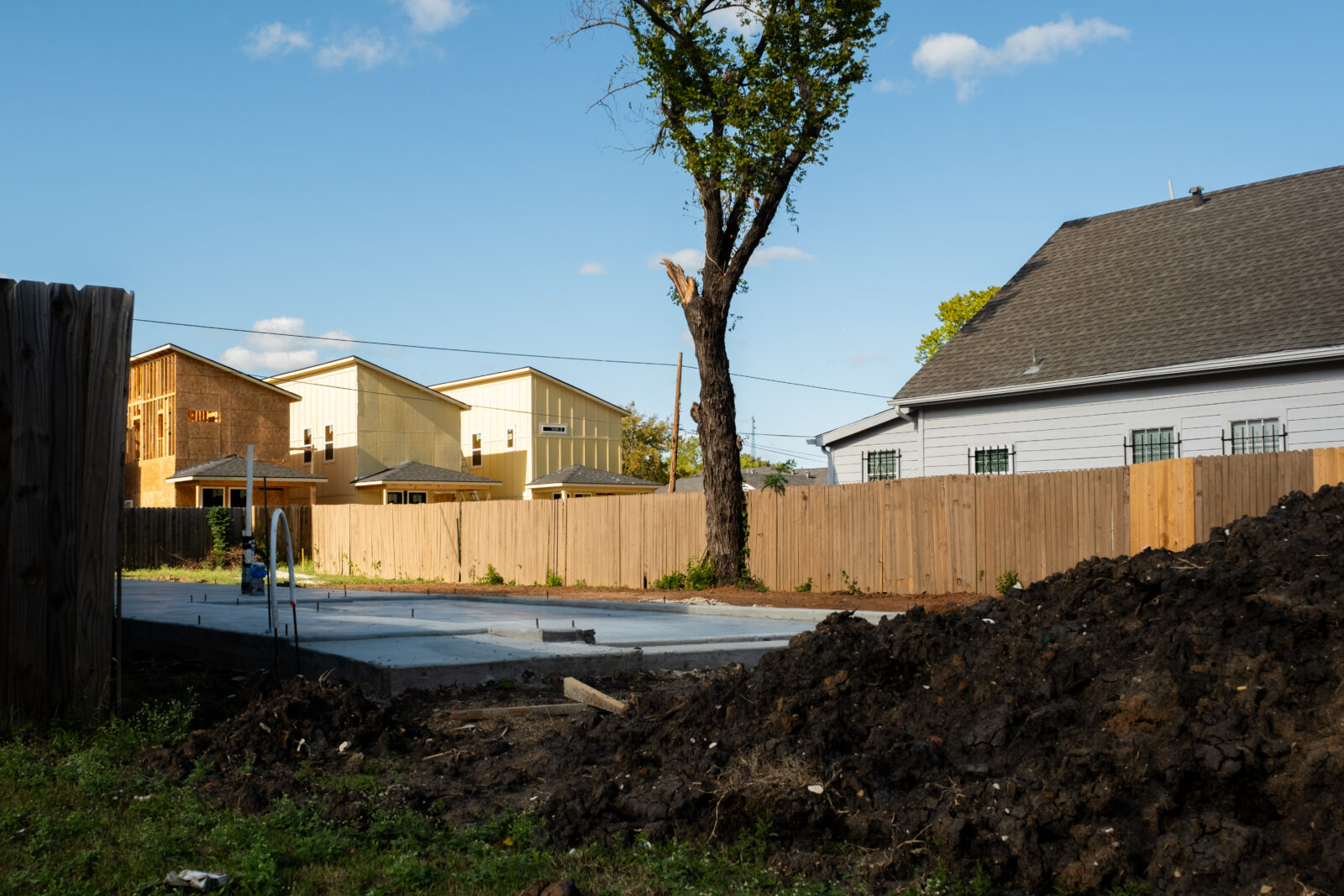
A concern commonly raised by residents who attended the meeting was newer homes constructed with starkly different architecture, height and lot coverage than historical homes. Former South Dallas councilwoman Diane Ragsdale has championed the phrase “grossly incompatible” to refer to such houses, and she and others are concerned about the displacement that may result.
“It’s not fair to South Dallas,” said an attendee when expressing their concerns on modern three-story homes being built next to one-story homes.
“That’s part of the plan — we are changing the laws about what type of house you can build,” responded Chief Planner Patrick Blaydes during the meeting.
Chief Planner Seferinus Okoth says proposed zoning changes for South Dallas will go before the City Plan Commission and then City Council “when we’re able to reach a reasonable consensus on zoning recommendations to advance” based on “the outcome of community engagement.”
“At this point, we’re anticipating that may happen in mid- to late 2026,” Okoth says.
Upcoming public meetings in the authorized hearing process:
Date: Nov. 13, 2025 (new date)
Time: 6–7:30 p.m.
Location: Exline Recreation Center | 2525 Pine St, Dallas, TX 75215
Topic: Zoning concepts
Date: Dec. 9, 2025
Time: 6-7:30 p.m.
Location: Martin Luther King Jr. Recreation Center | 2901 Pennsylvania Ave, Dallas, TX 75215
Topic: Zoning recommendations

Share This Story, Choose Your Platform!

Prior to joining the Dallas Free Press as a visual journalist, Camilo Diaz Jr. was a video intern at KERA, the NPR and PBS member station for North Texas, where he developed a deep appreciation for video production. He also worked as a multimedia fellow at the Fort Worth Report, covering local news in his hometown. As a teenager, he began documenting his community and identity through photography, leading him to the world of photojournalism. He went on to earn a bachelor’s degree in journalism with a concentration in photojournalism from the University of North Texas.
Beat: Visual and multimedia approach to capturing community and civic life
The images of our communities that appear in local news media are mostly of crime and blight, which doesn’t at all reflect their beauty and assets. This visual journalist sees neighbors and captures community and civic life in all of its facets. The journalist is a multimedia reporter with a photographic eye, who has the skills to meld images, video and audio for storytelling, and the desire to reach under-covered audiences.