Dallas Community Land Trust launches with a focus on South and West Dallas affordability


Property values continue to rise here in Dallas and all over the country, straining longtime homeowners who are struggling to pay their corresponding property taxes and stay in their homes, and making it more difficult for new homeowners to enter the market.
Community land trusts are an affordable housing model that aim to keep homes permanently affordable for working families — and now Dallas has one. On Saturday, Nov. 1, the Dallas Community Land Trust (DCLT) hosted its first open house, showcasing two homes in Bertrand and Dolphin Heights that will be available for purchase by the end of the year. We spoke with Ossie Kendrix, executive director of the DCLT, about how the land trust works and what it means for Dallas neighbors.
When was the Dallas Community Land Trust established?
The Dallas CLT began taking shape in 2022. By 2024, a formal board was established with seven founding organizations: The Real Estate Council (TREC) Community Investors, Builders of Hope, Frazier Revitalization, Southfair CDC, Innercity Community Development Corporation, Cornerstone Community Development Corporation and the Communities Foundation of Texas. Our leadership team engaged in early 2025. I [Ossie Kendrix] started as executive director April of 2025.
What is a community land trust?
A community land trust (CLT) is a nonprofit organization that aims to provide an affordable path to home ownership by keeping land costs low. It does this by owning the land and separating it from the cost of the home, which lowers the upfront purchase price and helps keep the home permanently affordable.
When someone buys a home through the CLT, they purchase the house but lease the land for a small monthly fee –– typically $25 to $40 per month –– through a long-term, renewable ground lease. This split-ownership model removes the cost of the land from the purchase price, which lowers both property taxes and the overall cost of homeownership. As a result, the home stays affordable not just for the first buyer, but for every future homeowner as well.
What are the eligibility requirements for neighbors who want to buy a Dallas CLT home?
The biggest qualification is households earning between 50% and 80% of the area median income. That includes people like teachers, city employees and other essential workers who keep our city running — they’re the ones who would typically qualify for a home like this.

What are the benefits for homeowners?
It helps keep neighbors in their communities. By making homes affordable, owners and buyers don’t have to worry about being priced out. They also don’t have to face the steep tax increases that often come with rising property values. Sure, there may still be small tax increases because the home itself gains value, but since the land cost is taken out of the equation, property taxes are reduced overall.
The real benefit is that the home remains affordable and can be passed down for generations. Even when the home is sold, it stays affordable because of a resale formula. Homeowners earn about 2 percent in equity growth per year, which allows them to build wealth while keeping the home accessible for future buyers. So, for example, if someone buys a $200,000 home and sells it five years later, they would walk away with over $20,000 in equity, which is wealth they can invest in their next purchase.

Would homeowners be able to make renovations or changes to their homes?
Yes, homeowners can make changes or renovations to their homes if they’d like. There are some restrictions when it comes to major additions, like increasing the living space, but those are always great conversations to have between the homeowner and the Dallas Community Land Trust organization.
Who owns the land that the house is on?
It’s owned by the organization (Dallas CLT). For this particular home, for example, the land is currently owned by Frazier Revitalization, one of our founding board members. When the home sells, ownership of the land will transfer to the Dallas Community Land Trust, where it will remain forever. A 99-year ground lease will be established with the new homeowner, ensuring the home stays affordable for generations to come.

What does the CLT gain by owning the land, and how does that support its mission long-term?
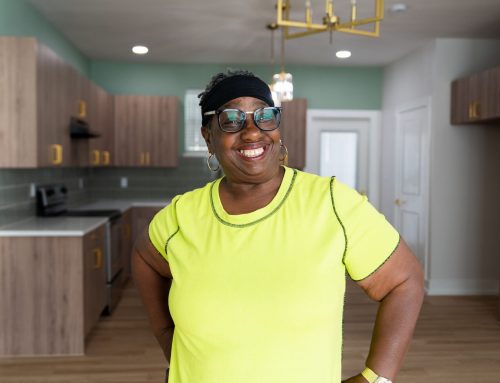
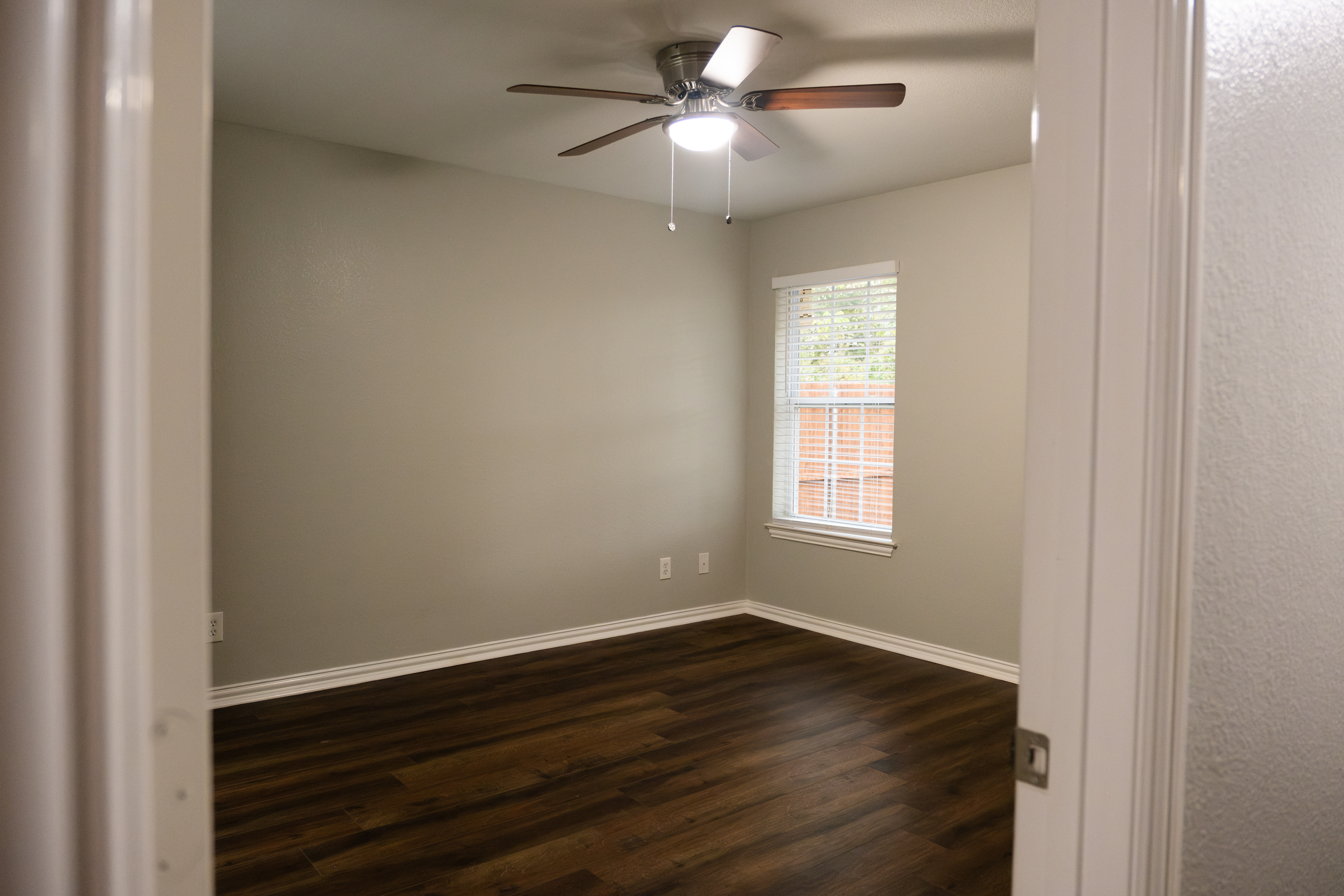
There’s really no profit made from the home sales. In fact, we raise funds to lower the overall cost so that the homes can remain affordable for qualified buyers. For example, this Dallas CLT home is a three-bedroom, one-bath property with a side driveway and no garage. The sale price is $199,000, and for comparison, the City-appraised value of the home is around $240,000.
How is the Dallas CLT funded?
We’re a new nonprofit organization. We received our 501(c)(3) designation in October. Our initial startup funds came from the JPMorgan Chase Foundation, and they also provided a $300,000 line of credit for land acquisitions.
As a nonprofit, we’ll continue to fundraise through a mix of public and private donors, including corporate partners, family foundations and individual supporters. We don’t currently receive any government funding, and I’m not certain that we will in the near future. However, we’re in the process of applying for a municipal designation with the City of Dallas. That designation would give us access to certain subsidies, though we’d still need to compete and formally apply for those opportunities.

Will there be more Dallas CLT homes?
Most definitely. We’re fortunate to have these first two homes in partnership with Frazier Revitalization. Our strategic plan is to have five homes sold by 2026, 10 in 2027, and 15 in 2028. We’re starting small and building our portfolio gradually.
Frazier Revitalization had owned these two homes for several years. They originally purchased them to keep the properties in the neighborhood and ensure they remained affordable. When the organization became part of the founding board of the Dallas CLT, they expressed interest in transferring the homes into the land trust.
These first two homes came into the CLT through a nonprofit partner, but that’s not the only way properties can become part of the land trust. The CLT can acquire homes or land directly from individual sellers, from organizations, or through foreclosure programs. There are also various lots across the city owned by individuals or groups that the CLT can purchase in the future.

Which neighborhoods will the Dallas CLT houses be in?
We’re a citywide organization, but our initial focus is on South Dallas and West Dallas. These neighborhoods have high rates of displacement, and we want to ensure that we can begin impacting those areas. The Anti Displacement Toolkit distributed by Builders of Hope identifies shared-equity models, such as community land trusts, as one tool to combat displacement and support generational wealth-building for potential homeowners.
It’ll take some time to transition from South to West Dallas because the need is so high in South Dallas. Many of our founding board members and most of our partner organizations are in South Dallas.



What are the challenges you’re anticipating as you launch this work?
The biggest hurdle is building trust and developing community outreach. When I say “building trust,” I’m referring to the fact that this is a new and unfamiliar model, especially in Dallas. It’s been proven in cities like Houston, Austin, and San Antonio, and now Fort Worth is coming alongside Dallas. But for a traditional homebuyer, it’s still something very different. There really aren’t examples here of an organization owning the land underneath a home.
We want to make sure people truly understand the model and feel confident in it. That means building trust with the organization by, number one, showing that we’re here to stay. Number two, making it clear that we aren’t a landlord. We won’t be checking in or managing the home in that way. And number three, helping homeowners feel comfortable knowing that while this is a new model for Dallas, it is a proven model elsewhere.
That’s why we’re taking things slowly and easing into the community. We want our CLT homebuyers to fully understand what it means to be part of a CLT community, whether that’s in their existing neighborhood or the neighborhood they choose to live in and raise a family.
The Houston CLT has been established for a few years. Are you learning from other community land trusts around the state or collaborating with them?
Yes. Thanks to the Texas Association of Community Development Corporations, we’re part of a monthly training and communication series that connects us with other CLTs across Texas. We’re also working alongside Fort Worth, which is launching its own community land trust around the same time. They’re a little ahead of us — they have two parcels of land and plan to generate about 500 units over the next three years.
We also look to the Houston Community Land Trust as a model. They’ve been in operation for about six years, and we see them as kind of our “parent” organization. We learn from their experience — what’s worked well, what challenges they’ve faced — so that as we move forward, we can navigate this process more smoothly.
Is there anything else you’d like to add?
We currently have two homes for sale, and we’d love for potential buyers to come tour them. We also invite Realtors to stop by so they can share information about this opportunity with their clients. Lastly, we welcome any organizations or partners who are interested in supporting or collaborating with the Dallas Community Land Trust.
Share This Story, Choose Your Platform!

Jennie is a first-generation journalist, educator, and community builder passionate about equitable access to information and storytelling. Her career spans classrooms and newsrooms: she began as a dual-language teacher in Dallas ISD through Teach for America and later led citywide journalism initiatives with the Dallas Media Collaborative. She has also mentored emerging journalists and led youth programs that blend media literacy with life skills. At Dallas Free Press, she oversees content strategy and partnerships that center community voices and make civic systems easier to navigate.