As Dallas reworks its home repair programs, some seniors are still waiting

News Based on facts, either observed and verified directly by the reporter, or reported and verified from knowledgeable sources.
Here’s the gist:
- For the last six years, Eula Wilson has been searching for a way to repair the South Dallas home she has lived in for more than three decades.
- Since first applying for assistance in 2020, Wilson has repeatedly navigated paperwork, eligibility requirements and changing program rules, only to encounter new obstacles along the way.
- Rather than giving up, Wilson continued advocating for herself, reaching out to nonprofits, city officials and Dallas Community Courts for help.
- In 2024, the City of Dallas paused many of its home repair programs and, at the end of 2025, shifted administration to Volunteers of America Texas. As the City works to relaunch the programs, residents like Wilson remain in limbo, waiting for a new start date and hoping to receive the repairs they need.
- Wilson’s experience offers a glimpse into what it can be like for residents to navigate home repair programs while living with urgent repair needs.
- Even as progress has been made on her case, Wilson’s journey underscores how long and complicated the path to assistance can be.
- Today, Wilson remains focused on the same goal she has pursued for years: making the repairs needed to stay safely in the home she loves.
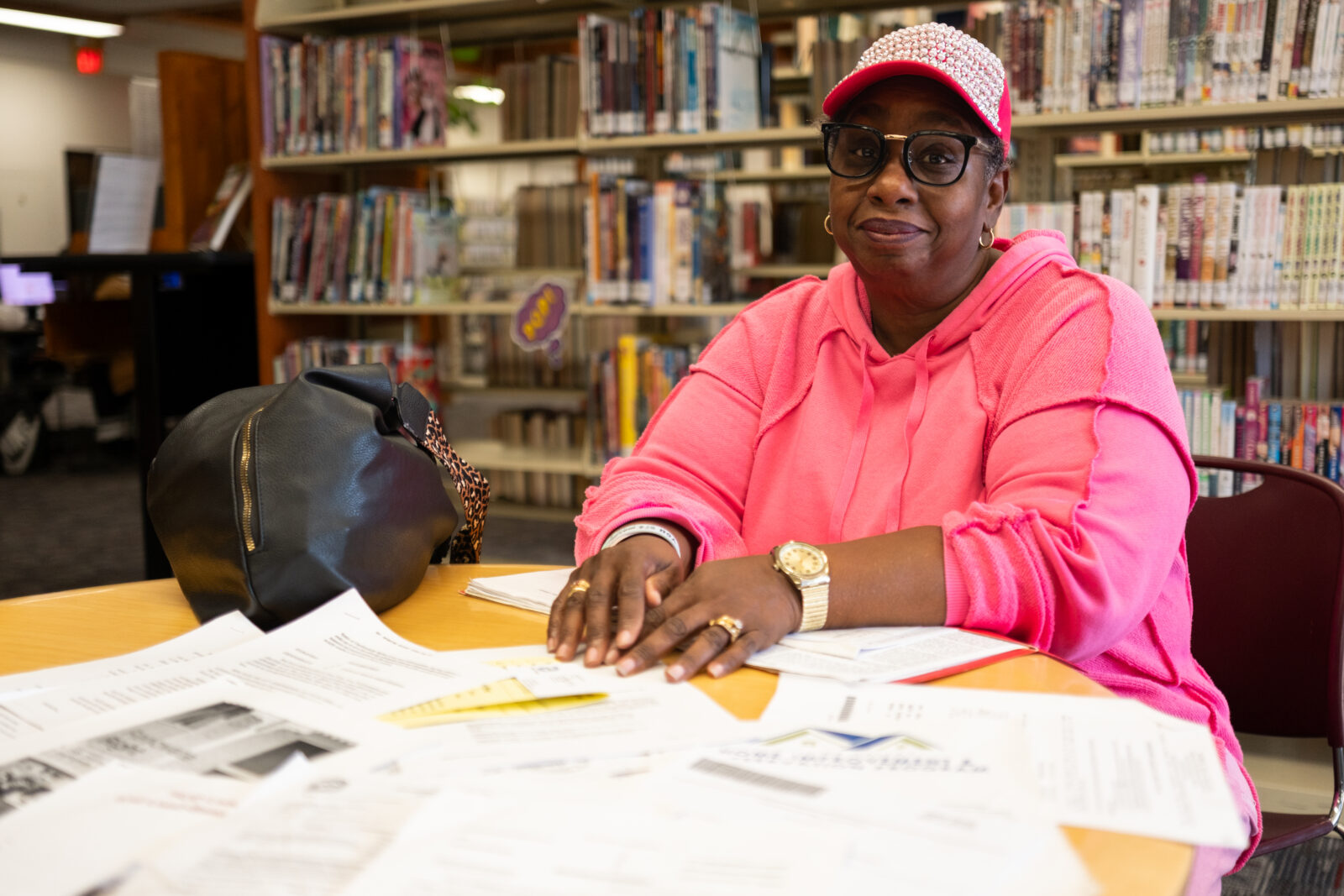
Eula Wilson arrives with a red folder tucked under the arm of her sweatshirt. It’s about two inches thick, filled with documents from years of trying to repair her home in South Dallas.
“I told you I had a book,” Wilson says with a laugh. “So, what do you want to know?”
She sits across the table in her pink tracksuit, her fingers carefully sifting through the seemingly endless pages. The light catches on the diamond wedding ring on her left hand from her marriage with Oliver Wilson, who passed away in November 2020.
As Wilson begins to lay out documents on the table, there are legal documents, letters of denial from home repair programs, deed transfers, property tax records, lead risk assessments, code enforcement notices and more — each a chapter in her years-long effort to qualify for local home repair assistance programs.
Wilson, now retired after two decades as a unit tech at Parkland Hospital, has lived in her 700-square-foot Mill City home for 33 years. It sits behind a short chain-link fence, with yellow siding faded from decades of Texas sun. A few windows are boarded and the roof shows its age, but the neatly trimmed yard and chair on the porch reflect her steady care of and pride in the place she’s called home for more than three decades.
“To be truthful, I really need a whole house,” Wilson says.

Before her husband died, the couple had already tried seeking help from the City’s home repair programs. Oliver, who was on disability, took the lead on the process while Eula worked night shifts at Parkland. At that time, Eula says, the City told them their combined incomes were too high to qualify.
In 2021, a year after her husband’s death, Wilson learned about the City’s home repair programs from a flyer she picked up at South Dallas’ Martin Luther King Branch Library.
“They had some paperwork there,” she recalls. “I filled it out, turned it in by the date they said, and they told us they were going to pick so many people.”
A few weeks later, she received a letter from the City. She learned that she did not qualify because of back taxes on her home.
“They said if I got on a payment plan, I’d be able to qualify,” she says. “So that’s what I did.”
When she applied again in 2022, another problem surfaced: The City told her there were liens attached to her property. So Wilson took the steps to overcome that barrier.
“Every time I thought I had everything they asked for, there was something else,” she says.
Our reporting approach
What do Dallas residents need from journalists when it comes to housing?
That question has guided our housing coverage for years. Through conversations with residents, nonprofit leaders and community advocates, we repeatedly heard that one of the biggest challenges facing homeowners was accessing the resources needed to repair and remain in their homes.
Those conversations led to the creation of our Home Repair Resource Guide and an ongoing reporting project examining how Dallas’ home repair programs work, who they serve and where residents encounter barriers. Since the City paused many of its home repair programs in 2024, we’ve continued following the story — tracking policy changes, documenting residents’ experiences and reporting on what comes next.
This story is part of that continued effort.
She also began working with Cadilac Law, a city-contracted legal services provider who helped her obtain a homestead exemption and a Lady Bird Deed, which would transfer the deed from her husband’s name into hers. Some services were covered under the City’s contract, while Cadilac offered others separately at an additional cost to Wilson.
“My husband had passed, so everything was still under him,” she explains. “Even though I had the death certificate and our marriage certificate, I had to get everything changed over before they’d look at my application again.”
By 2023 she believed everything was finally in order. But that same year, the City changed its system to a lottery, meaning even eligible homeowners weren’t guaranteed to be selected.
“If they had all that on the paperwork the first time, I could’ve had it all together,” Wilson says, shaking her head. “Every year, it was something new.”

Still, she kept at it. She purchased home insurance — another new requirement, she says — and in early 2024 City inspectors came to her home to conduct an assessment.
“I had two inspectors come,” she recalls. “After that, they told me my house had too much work for the budget. But nobody ever told me what the limit was.”
In 2024 the City’s maximum budget for home repairs was $24,000, down from $73,170 in 2023. Wilson never received her home’s assessment from the City, so Dallas Free press filed an open records request with the City to obtain a copy.
The assessment showed that Wilson’s needed repairs, which range from an electrical re-wire to a new water heater, plumbing system and an ADA shower, would cost $40,340. An assessment of needed foundation or roof work wasn’t included because they aren’t included in the City’s definition of “major-systems repair.”

Today, Eula’s house remains unrepaired. She says she wishes the City’s office could have provided her an exhaustive list of tasks to complete and boxes to check so that she could have knocked out barriers simultaneously. The City follows federal guidelines because most home repair funds are provided by the U.S. Department of Housing and Urban Development, which has stringent rules.
In March 2025, Wilson received a code compliance citation from the City for peeling paint on her home’s exterior. This sent her into Dallas’ community court system, where she was connected with Ebony Eugene, a social services coordinator at the South Dallas Community Court located inside the Martin Luther King, Jr. Community Center.
The program offers case management for residents who receive certain “quality of life” citations, including common code compliance tickets tied to exterior conditions like paint or deteriorating siding. Once a resident enrolls, Eugene says, the court communicates with code officers to prevent repeat citations for the same issue while the homeowner works toward repairs.
Eugene notes that many seniors are stuck waiting on home repair programs or patching problems as their finances allow.
“The least we could do is extend that time and think together, brainstorm resources and other creative ways to address the issues,” she says. “I’ve seen both sides. Some homeowners eventually get help. Many don’t, and that’s when we have to start having hard conversations about what comes next.”
The South Dallas community court is just one of five across the city; other locations include Downtown, West Dallas, South Oak Cliff and Vickery Meadow. Eugene says home repair related cases make up most of her work — about 50 of the roughly 80 people on her caseload. The court’s timeline typically begins with a six-month period, she says, but extensions are common when homeowners can show progress, including proof of applications, updated quotes, or other documentation.
“They know I’m still waiting for everybody, anybody, somebody to help with home repair,” Wilson says.
In the meantime, Wilson continues to attend community court on the first Thursday of every month.
Share This Story, Choose Your Platform!

Jennie is a first-generation journalist, educator, and community builder passionate about equitable access to information and storytelling. Her career spans classrooms and newsrooms: she began as a dual-language teacher in Dallas ISD through Teach for America and later led citywide journalism initiatives with the Dallas Media Collaborative. She has also mentored emerging journalists and led youth programs that blend media literacy with life skills. At Dallas Free Press, she oversees content strategy and partnerships that center community voices and make civic systems easier to navigate.