How firm an unintended foundation: Cornerstone Baptist Church 40 years later

News Based on facts, either observed and verified directly by the reporter, or reported and verified from knowledgeable sources.
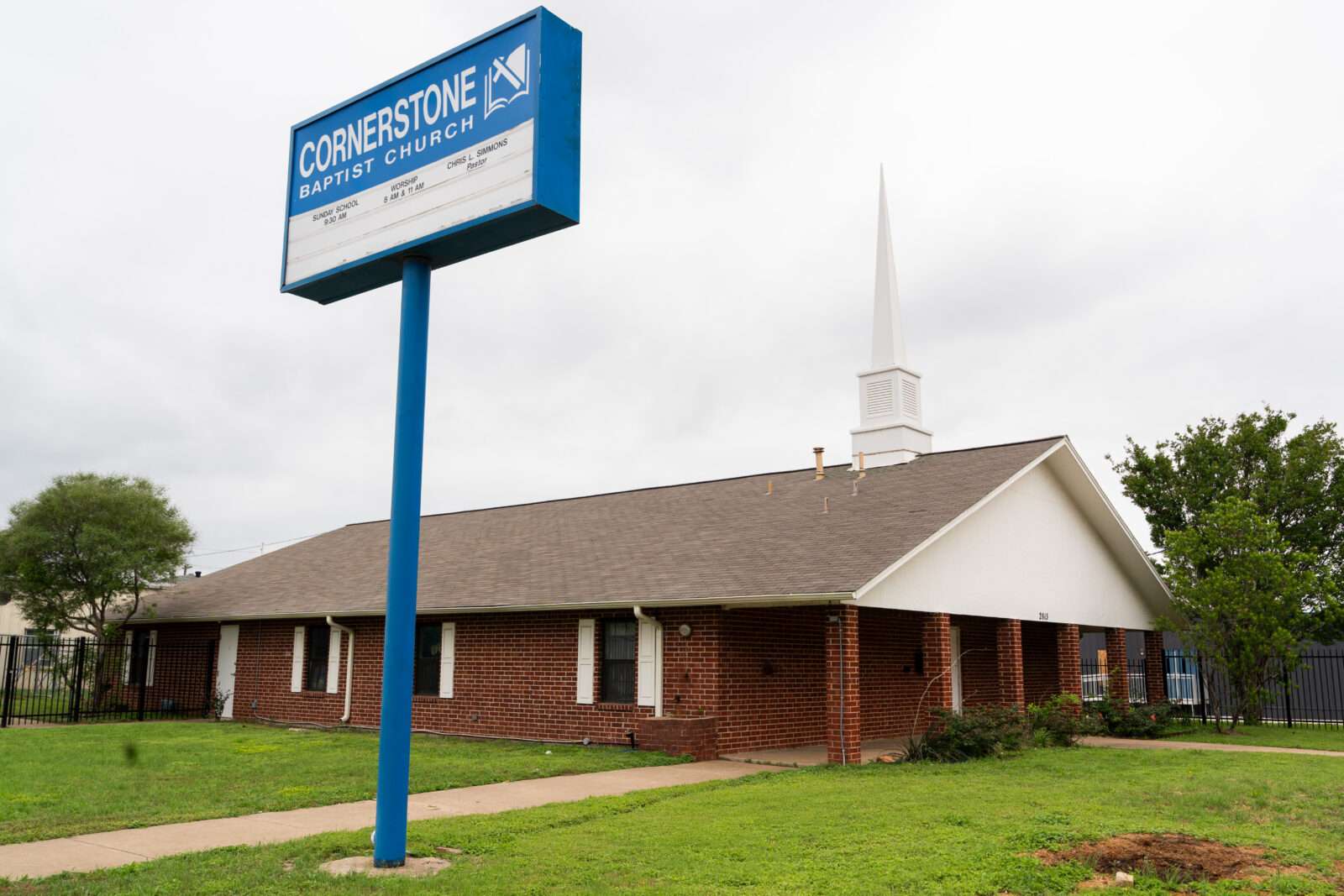
The paradox of the Baptist church in South Dallas called “Cornerstone” is that its original building wasn’t supposed to have a foundation.
Cornerstone’s roots grew out of Second Baptist Church, established in 1888 at Ervay and Corinth. Seventy years later in 1958, Second Baptist moved to the then “suburbs” of East Dallas and became Westglen Baptist Church on Ferguson Road, mirroring the “white flight” of hundreds of other urban churches.
By the early ’60s, Second Baptist’s abandoned building had become the Ervay Street Baptist Center, a community ministry sponsored by the Southern Baptist Convention’s Home Mission Board. Then in the ’80s, the SBC’s decision to end its financial support of urban mission centers shuttered Ervay Street Baptist — but when the SBC walked away, several local Baptist churches showed up.
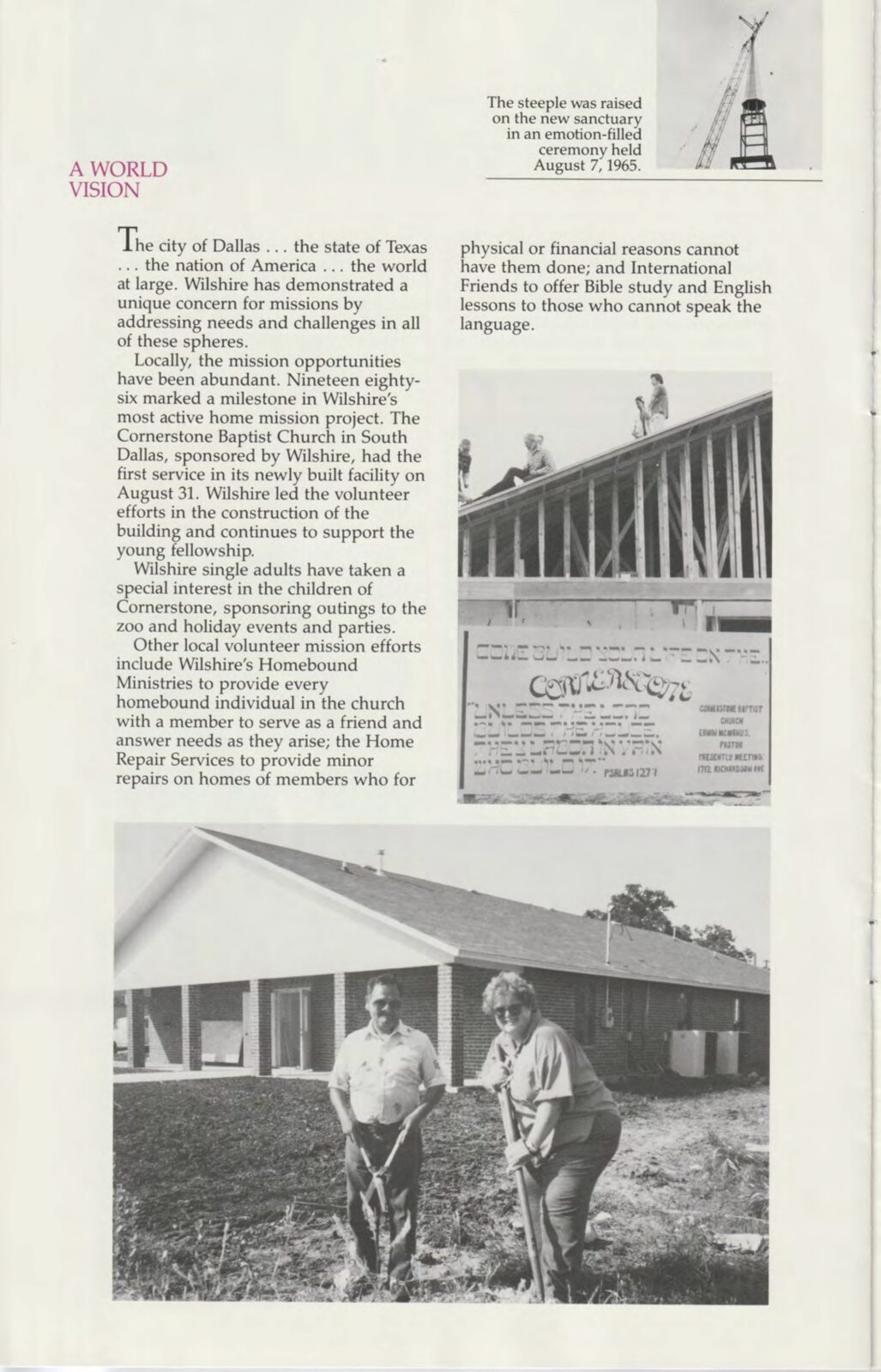
The coalition of churches purchased a property at 2815 Ervay, a few blocks south of the shuttered center. One of them was Wilshire Baptist Church in East Dallas, whose members “led the volunteer efforts in the construction of the building,” notes the missions overview in Wilshire’s 35th anniversary booklet published in 1986, the same year Cornerstone Baptist Church opened. (Wilshire celebrates its 75th anniversary this year, as Cornerstone commemorates its 40th.)
The church was built in a “war zone,” a label conferred by Dallas police and reinforced by media, because of the drive-by shootings, the gang activity, the prostitution, as the Rev. Chris Simmons recalled in a recent interview: “We buried a lot of people in this neighborhood, a lot of young men. Many of the people who could get out of the neighborhood, got out … It left a lot of urban blight, a lot of vacant apartments that were owned by slum lords in order to continue to cover the drug trade.”
The plan was to build Cornerstone on a pier and beam foundation so that “when the church died, they could move the building and sell the land,” Simmons says. But for some reason — perhaps because the original Cornerstone building sits on toxic soil, says longtime Wilshire member Bob Law — the church was constructed atop a slab foundation.
Today Cornerstone is synonymous with Simmons, who has shepherded the church and its ministries for 37 of its 40 years. Most people know him as “Pastor Chris.” He had moved from Washington, D.C. to attend Dallas Seminary, and one day as he walked through the student center, praying about a ministry opportunity, he saw a note on a message board about a role assisting with education and music in an inner-city congregation. His intent was to work with Cornerstone until it was time for him to return to D.C.
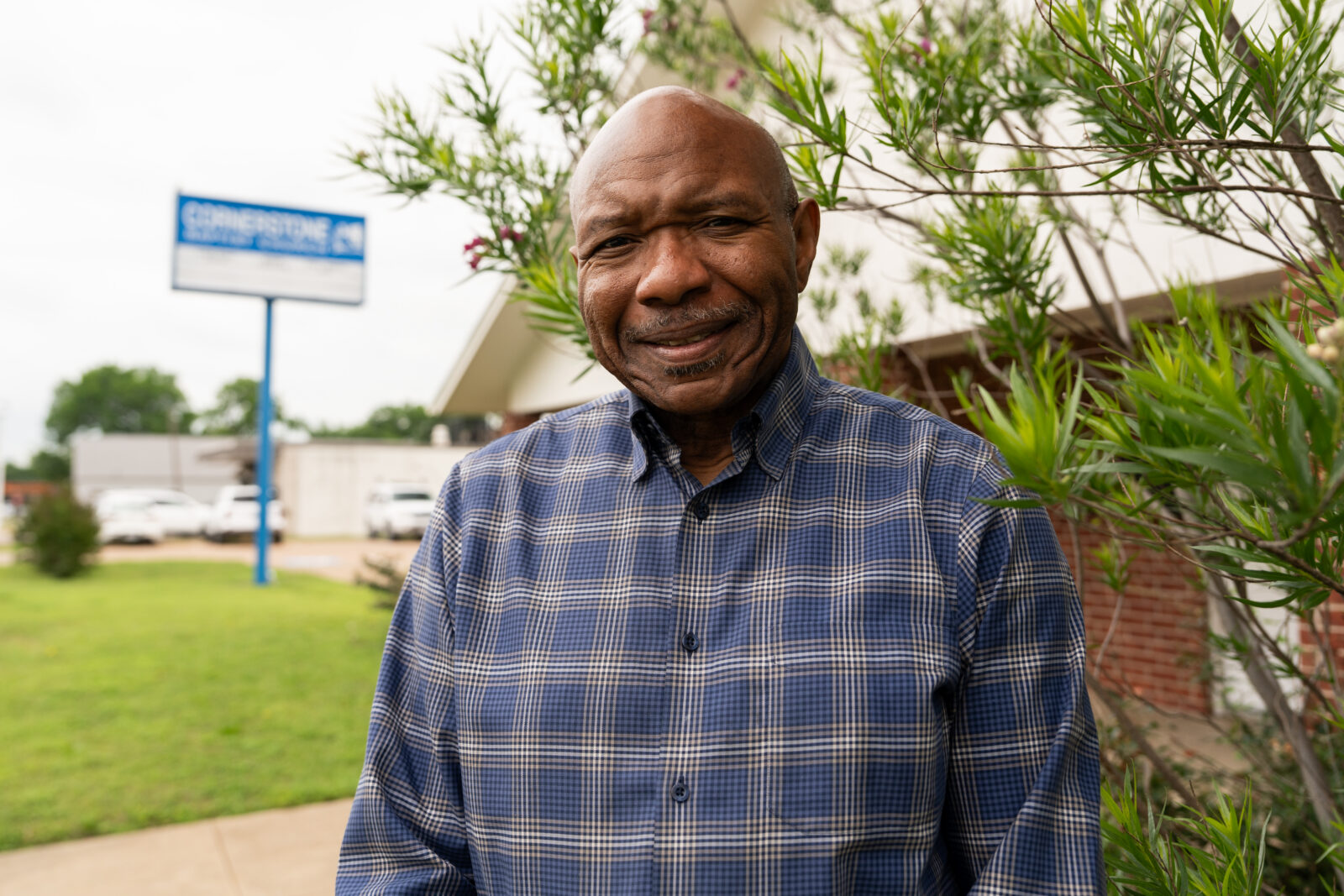
“Some old ladies in the church told my wife, ‘We like him, but he’s not going to make it in the neighborhood.’ And so we took that kind of as a challenge,” Simmons laughs. “Ironically, 37 years later, some of those old ladies say, ‘The jury is still out. We still don’t know if you’re gonna make it or not.’ ”
“To be quite honest, if I understood what we were getting into. I probably wouldn’t have stayed, but I was young. I didn’t know any better,” Simmons recalls. “And we just really believed that God had called us to this place and and just made a decision that we would raise our family here in this community.”
During our 30-minute interview, no less than five people walking down the Ervay sidewalk or darting in between Cornerstone’s ministry buildings called out, “Hey, Pastor Chris!” to which Simmons would cheerfully respond, greeting them by name, asking how they were doing, and telling us a bit of their story.
In the early days, however, most people thought Simmons was an undercover agent.
“Unfortunately, doing a lot of funerals, they understood I was the pastor,” Simmons says. “And then we started doing children’s programs and connecting with kids, because if I was in a very heavily drug-infested community, if the kids would call me out, then the people would say, ‘Oh, he must really be OK because the kids know who he is.’ And so that’s kind of how I just started making sure people knew who I was, so they wouldn’t shoot me, thinking I was undercover.”
Simmons says he understood that he was an outsider in an under-resourced community in crisis, and his strategy was to attend community meetings, sit in the back “as a fly on the wall,” listen to neighbors’ concerns, and ask himself, “Is there something we can do to meet that particular need in the neighborhood?”
“So many of our ministries came out of what we heard in those community meetings,” Simmons says. “Because what we did not want to do is scratch where the community did not itch, and we didn’t want to answer questions that the community were not asking.”
Cornerstone outgrew the original building and now meets in the former Minyard’s grocery store around the corner on Martin Luther King Jr. Boulevard. Its original structure on Ervay now functions as an after-school program, and is flanked on all sides by the church’s expanding footprint.
The church now owns 52 properties, making it the largest landholder in the neighborhood, Simmons says, with everything from a kitchen that provides 10,000-15,000 meals a month to the unhoused, clinics for medical and dental care, a maternity home for pregnant women, reentry housing for people transitioning out of incarceration, a community garden, a convenience store and a laundromat. Most of the efforts begin where Simmons started long ago — listening to what the community needs and responding.
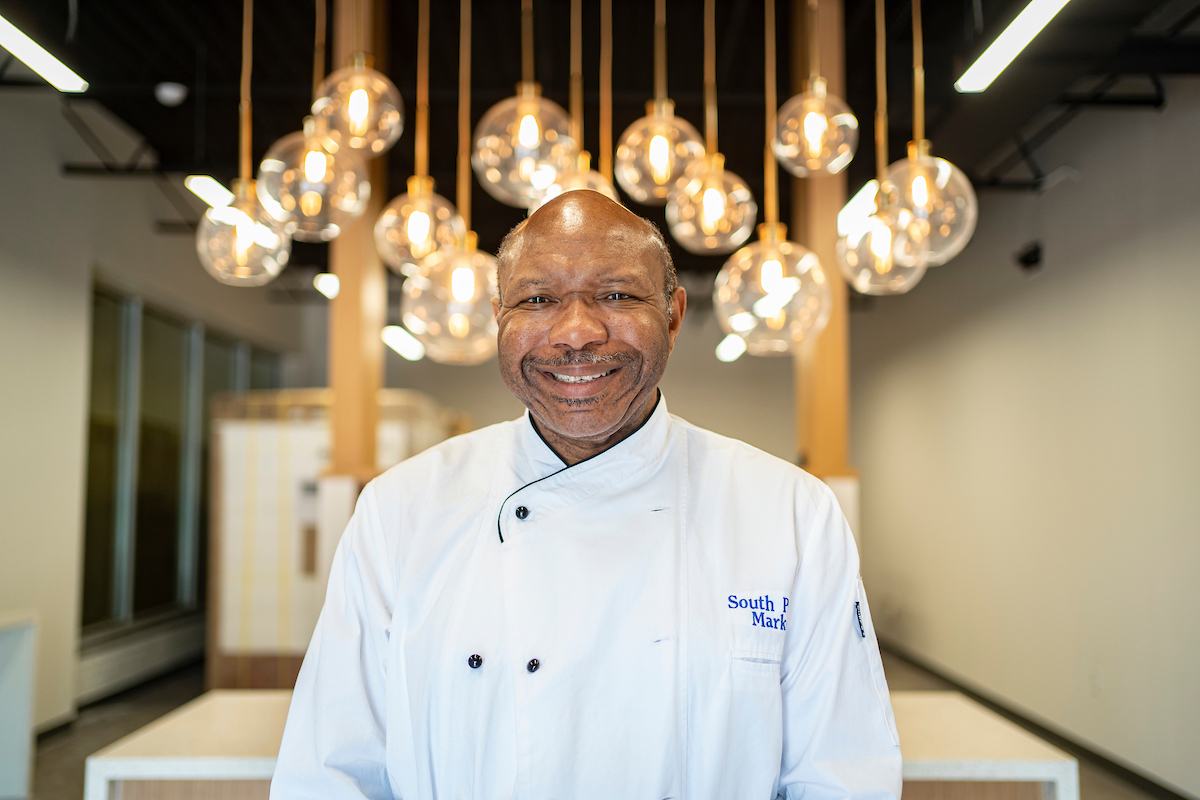
“We always make it a point to make sure we are in dialogue with the community,” he says, “that we’re hearing what their concerns are and seeing if we can address those concerns.”
These days, Simmons says, Cornerstone hears three main asks:
- Affordable housing, which is “why we are so aggressively trying to purchase the vacant land and dilapidated apartments to renovate those for the good of the neighborhood,” Simmons says. “We’re in a period now, a revitalization that includes the people in the neighborhood. We do not want urban renewal to equal urban removal.”
- Small business development, the reason that “back in 2020 we started the Cornerstone Center for Economic Opportunity now works with about 175 entrepreneurs, helping them to start their businesses and scale their businesses.”
- Workforce development, by teaching HVAC, electrical and plumbing skills so that neighbors aren’t limited to fast food and other minimum wage jobs, and instead can earn “livable wages” and afford to stay in South Dallas.
Four decades after the foundation was laid, and 37 years into Simmons’ ministry, the work isn’t finished. The church, so to speak, is still under construction. But these days, “people can walk the neighborhood at night freely without fear of being taken advantage of or being robbed,” Simmons says. “I mean, we’ve still got a long ways to go, but I think we’ve created a community where people know each other and trust each other.”
A version of this story was co-published in the Wilshire Baptist Church Tapestry as part of the congregation’s 75th anniversary celebration. Dallas Free Press executive director Keri Mitchell is a Wilshire Baptist member.
Share This Story, Choose Your Platform!

Keri Mitchell has spent 20+ years as a community journalist, including 15 years dedicated to community and civic journalism at Dallas’ Advocate magazines. She launched Dallas Free Press in early 2020 with the belief that all neighborhoods deserve reporting and storytelling that values their community and holds leaders accountable.
Mitchell says she is energized by “knowing our work is making an impact — listening to people, telling their stories with strong narratives paired with compelling data that leads to change. I also love spending time in our neighborhoods and with our neighbors, learning from them and working to determine how journalism can be part of the solution to their challenges.”
Mitchell is proud to be the winner of multiple awards during her journalism career including: Finalist in Magazine Feature Reporting (2018) and Finalist in Magazine Investigative Reporting (2017) from Hugh Aynesworth Excellence in Journalism, Best Feature Story (2011) from Texas Community Newspaper Association and Best Magazine Feature (2011) from Dallas Bar Association Philbin Awards.
Areas of Expertise:
local government, education, civic issues, investigative and enterprise reporting
Location Expertise:
Dallas, Texas
Official Title:
Founder + executive director
Email Address:
keri@dallasfreepress.com