Dallas’ home repair programs are on hold. Here’s why and what comes next

News Based on facts, either observed and verified directly by the reporter, or reported and verified from knowledgeable sources.
Here’s the gist:
- The City of Dallas’ home repair programs have been closed to new applicants since August 2024 while the City restructures how the programs are managed.
- The City has contracted Volunteers of America Texas to administer home repair and homebuyer assistance programs, replacing the previous city-run model.
- Nearly $13 million has been allocated for the new, two-year contract, including about $10 million in unspent home repair funds carried over from previous years.
- Before accepting new applications, Volunteers of America Texas will first work through roughly 130 to 135 backlogged home repair cases from the 2024 application period, according to Housing and Community Empowerment Director Thor Erickson.
- City officials say they expect outsourcing the program will reduce administrative delays and help repair funds reach residents more quickly.
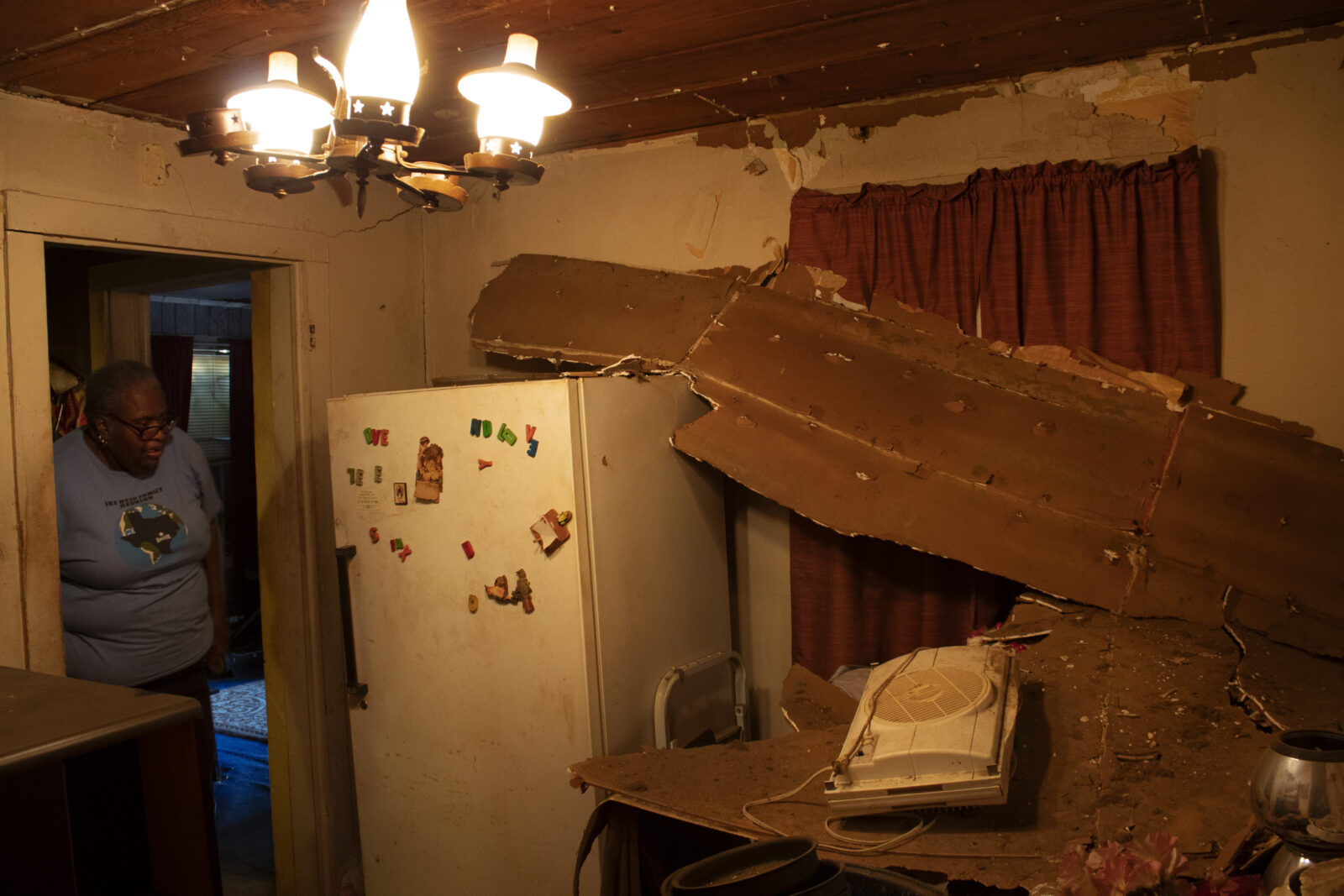
- For homeowners like Eula Wilson, who first applied for assistance in 2020, the pause has extended years of uncertainty as they wait for repairs needed to remain safely in their homes.
- The City expects the revamped home repair program to relaunch in spring 2026, though a date for the next application period has not yet been announced.
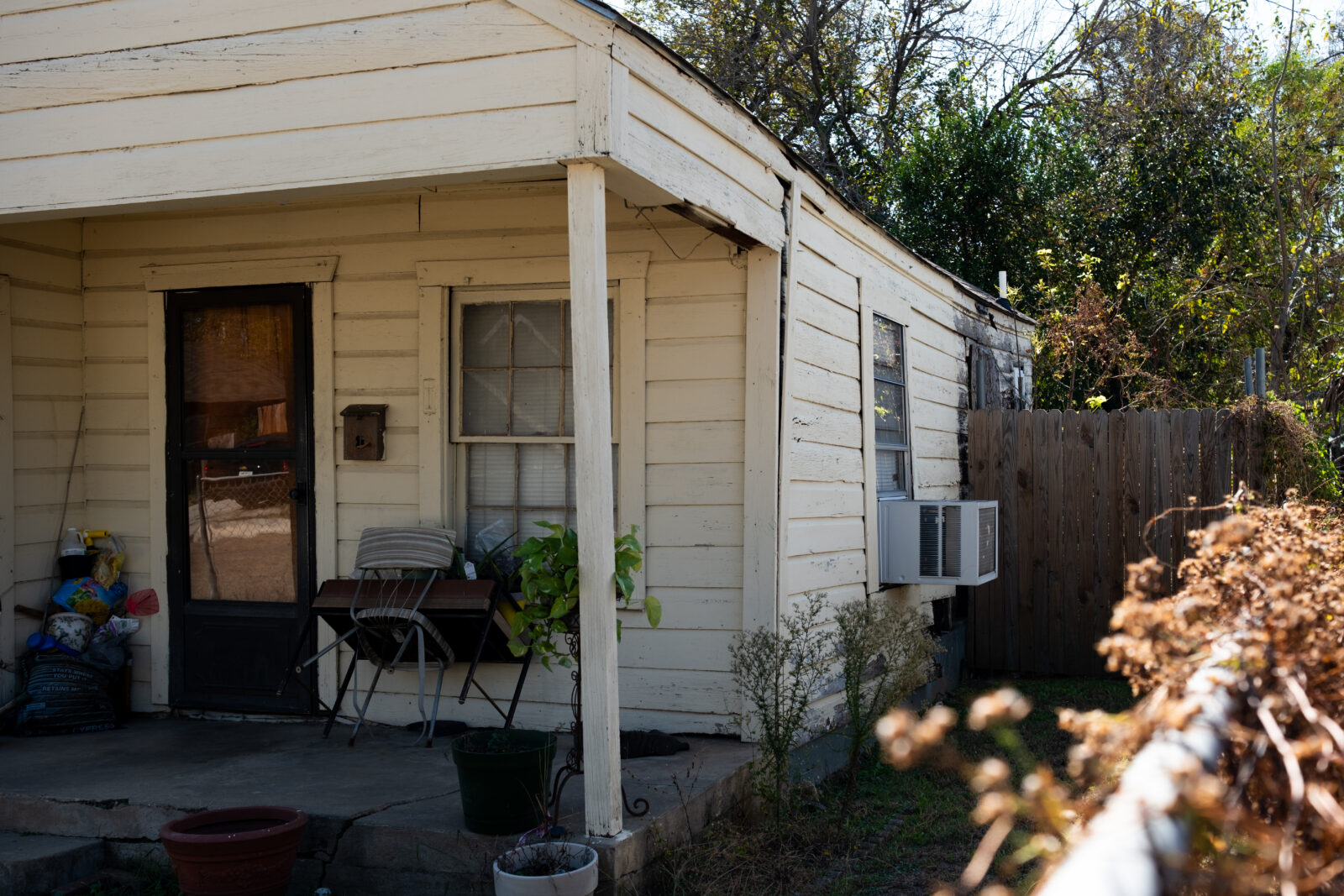
For thousands of Dallas homeowners struggling with leaky roofs, broken HVAC systems, and crumbling foundations, federally-funded home repair programs funneled through the City of Dallas have long been a way to prevent their displacement and help them avoid costly contractor bills.
“Home repair definitely is one way to keep people in their homes,” says Cynthia Rogers-Ellickson, former director of housing and community development. “For example, seniors can’t tolerate excessive heat and cold. That’s one way we help keep them in their homes: paying to get their heating and air system working, and addressing plumbing problems.”
However, that lifeline is now on pause. If you visit the City of Dallas website today, you’ll find three programs listed for home repairs, but across each you’ll see large red words that read: “THIS PROGRAM IS CLOSED AND NO LONGER ACCEPTING NEW APPLICATIONS.”
The reason is that the City is completely revamping its approach. Its last open application was in August 2024. Rogers-Ellickson, who retired on Nov. 30, told us the department’s 2025 priority was to outsource the home repair and homebuyer assistance programs.
“When we say outsourcing, we mean giving those dollars to a vendor outside of the City offices to run the programs,” Rogers-Ellickson says. “We find that in today’s processes in the City, it’s become very difficult to spend a dollar without a lot of scrutiny, and the programs are meant to run themselves fluidly, so that the money gets out to the community and doesn’t sit in our accounts for very long.”
Rogers-Ellickson adds that staff turnover can drain institutional knowledge and slow the flow of dollars to residents. Outsourcing, she says, should get the job done faster and with less “red tape.”
In November 2025, City staff recommended Volunteers of America Texas, Inc. as the vendor to administer the program. Dallas City Council approved the recommended two-year, $13 million agreement, with renewal options.
Under the terms of the contract, nearly $1.7 million will pay Volunteers of America Texas to administer the programs, and the rest “shall be used … for direct delivery of the services.” The City now anticipates the home repair program will relaunch this spring.
According to Thor Erickson, who was Rogers-Ellickson’s No. 2, nearly $10 million of the City’s $13 million contract with VOA consists of home repair funds carried over from previous years that the City didn’t spend. The additional $3 million is allocated from the current 2025-2026 budget.
How Dallas’ new housing department will change home repair services
Erickson is now director of the City’s Office of Housing and Community Empowerment department, a mash-up of his former department and what used to be the offices of homeless solutions and community care. City Manager Kimberly Bizor Tolbert consolidated the three offices as part of the September 2025 budget process.
Rogers-Ellickson says the new department is “people-focused” with the goal of connecting homeowners to resources for other needs they may have.
“For instance, we get to a home and the owner needs more than just a repair, Rogers-Ellickson says. “They need food, or they need counseling, or they need companionship. … we don’t provide that. We are strictly financing their repair.”
Rogers-Ellickson believes that with the departments now merged, the City will be better equipped to serve mental health and social needs, as well as fixing homes so residents can stay in them.
Rogers-Ellickson said last fall, however, that the department merger could “stall the process quite a bit.” Since most home repair dollars are federally funded through Housing and Urban Development’s Community Development Block Grants, the City had to amend its federally approved funding plan before transferring administrative responsibilities from City staff to an outside vendor — a process that began last October.

What residents can expect from the new Dallas home repair program
Even when the new application process opens, Rogers-Ellickson says the City will start with backlogged applications before rolling it out to other residents.
“We have a pool of over 200 applications that sit there,” Rogers-Ellickson says. “We don’t have any space for new applicants yet, so they will do another open application and a lottery.”
Our reporting approach
What do Dallas residents need from journalists when it comes to housing?
That question has guided our housing coverage for years. Through conversations with residents, nonprofit leaders and community advocates, we repeatedly heard that one of the biggest challenges facing homeowners was accessing the resources needed to repair and remain in their homes.
Those conversations led to the creation of our Home Repair Resource Guide and an ongoing reporting project examining how Dallas’ home repair programs work, who they serve and where residents encounter barriers. Since the City paused many of its home repair programs in 2024, we’ve continued following the story — tracking policy changes, documenting residents’ experiences and reporting on what comes next.
This story is part of that continued effort.
The City’s call for proposals, to which Volunteers of America (VOA) Texas responded, noted that $5.47 million of the $13 million contract is committed to 176 homes from the August 2024 application process. Erickson confirmed via email that 130-135 of those homes are still “in the pipeline” and will be completed by VOA. In all, the City expects the nonprofit to serve 450 homes within the 2-year timespan.
“VOA will manage all intake through one streamlined application,” Erickson says. “VOA will announce when the next application period will be, after they are onboarded. Confirmed dates should be available in early spring 2026.”
Ultimately, home repair programs funded by local and federal governments are not meant to act as charity but to address issues of public health, safety and economic well-being — qualities also outlined in city codes. The underlying legal philosophy is that property owners who don’t comply with codes risk not only their own well-being but their neighbors’ too.
Local dollars lessen homeowner restrictions for home repairs
Since 2019 when the Home Improvement and Preservation Program (HIPP) program first launched, Dallas homeowners have had to navigate a patchwork of City-run initiatives. Lead issues, for example, could be addressed by a HUD grant specifically for homes with lead-based paint. A senior home repair program allocated grant funds to accessibility improvements, such as a wheelchair ramp.
Many programs had a short window for applications, and each was based on a different federal grant or pot of municipal money. Some were tied to federal funding streams with strict eligibility rules; others were neighborhood-specific.
For example, the West Dallas and Tenth Street programs launched in December 2020 targeted those two historically disinvested neighborhoods using discretionary bond funds, allocated by those neighborhoods’ city council members. Unlike the City’s federally funded repair programs, which must serve residents based on income across the entire city, these initiatives were designed to reach residents in specific areas that had long been overlooked by citywide funding formulas.
“Those programs went away because they were bond-funded,” Rogers-Ellickson explains. “Councilmember Carolyn Arnold funded Tenth Street with her discretionary bond funds, and Councilmember Bazaldua did the same for his area. Councilmember Narvaez funded the West Dallas program. They were great programs, but they ran out of bond money.”
American Rescue Plan Act (ARPA) federal grant funds awarded during the Covid pandemic also were designated for neighborhood revitalization in targeted areas — Joppa, Tenth Street and the Five Mile Neighborhood.
Today, the City still supports a few area-specific initiatives through Tax Increment Financing (TIF) revenue, which is generated from property tax increases that result from development in specific sections of Dallas. Those funds currently support home repair and homebuyer assistance programs in the Oak Cliff Gateway, Fort Worth Avenue and Deep Ellum. But Rogers-Ellickson notes that these dollars also are temporary.
“Once the TIF money runs out, those will go away too,” she says. “These special areas are created from funding sources like bond or TIF dollars that don’t have the same federal restrictions. The federal government doesn’t allow us to target by neighborhood that way.”
The challenge of limited (and limits to) federal home repair funding
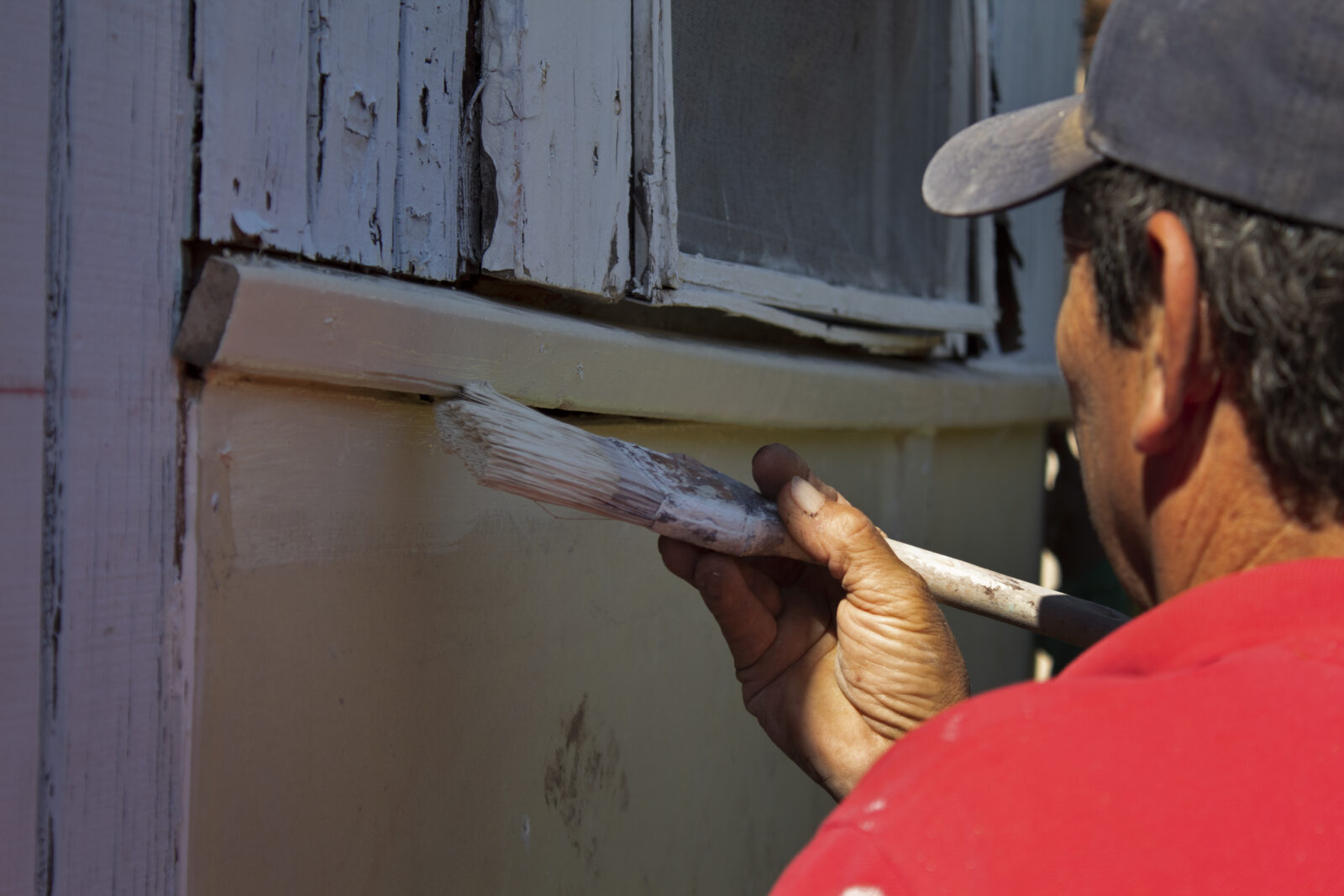
HIPP’s federally funded “major rehabilitation” program served as the City of Dallas’ primary vehicle for large-scale home repairs. In 2023 homeowners could receive up to $73,170 for major rehab work, though eligibility requirements were strict: Applicants needed a clear title to their home, at least six months of ownership, no property liens or delinquent taxes, and proof of homeowner’s insurance.
By 2025, the program was straining under limited budgets and slow approval timelines. According to the city’s website, the allocated per-home forgivable loan assistance had dropped from roughly $73,000 in 2023 to $24,000 in 2024 — a 67 percent reduction that significantly narrowed the scope of potential repairs.
In August 2024, before the City paused new applications, homeowners could still apply through HIPP’s three main offerings:
- Emergency Home Rehabilitation (EHR): Grant assistance of up to $10,000 for low- and moderate-income homeowners needing urgent repairs that posed immediate health or safety concerns. Applications had to be submitted within four days of the emergency.
- Dallas Tomorrow Fund (DTF): Up to $20,000 for exterior code-violation repairs. Eligible homeowners were typically referred after a City code compliance officer gave them a notice of violation or citation, and they could not afford to make the corrections.
- Major-Systems Repair Program (MSRP): Forgivable, interest-free loans of up to $24,000 to address mechanical, electrical, plumbing, structural or accessibility upgrades. The program also could fund lead or asbestos remediation, tree trimming and demolition of hazardous structures.
While the broader home repair program remains on hold, the City continues to fund a limited number of emergency repairs using revenue from its Mixed-Income Housing Development Bonus (MIHDB) program. These are local dollars collected from developers who opt to pay the City a fee based on their development’s size and scope, rather than including affordable housing units in their new projects.
Rogers-Ellickson said the city intentionally uses MIHDB funds for emergency fixes because these dollars aren’t subject to federal restrictions.
“To do emergency repairs, we can’t have any strings,” she said. “We’ve got to be able to get out there, fix that repair, and move on. Federal funds come with too many requirements. You still have to do an environmental review even if you’re only giving someone less than $5,000.”
She says future home repair programs will draw roughly $3 million annually from HUD and about $2 million from Tax Increment Financing (TIF) revenue, which is generated by economic development in designated districts. Those two funding streams will support the new vendor-led program once it launches this year.

Volunteers of America Texas meets with South Dallas leaders on home repairs
Volunteers of America of Texas representatives have met with at least one community group — the South Dallas Fair Park Faith Coalition, a 501(c)(3) comprised of hospital systems, neighborhood associations, faith leaders, city officials and public safety partners focused on ZIP codes 75215 and 75210.
Rev. Dr. Todd Atkins, the coalition’s president, says that home repairs have become one of the most urgent issues that longtime South Dallas families face in regard to stability and displacement.
“This is where we can have a tangible and immediate impact,” he says.
Looking back, Atkins says the City’s previous home repair programs often failed to meet South Dallas residents where they were. He describes the application process as unclear and difficult to navigate, particularly for homeowners dealing with home title issues or limited access to technology. He criticizes the program’s blind lottery system, arguing that it favored chance over need, and says the City’s definition of “major systems,” which excluded roof and foundation repairs, left out many homeowners facing the most serious structural problems.
“To me, that doesn’t speak to the long-term sustainability of a house,” Atkins says. “If you have foundation issues, then you’re going to have plumbing issues, electrical issues. All of it is connected.”
Over the past eight months, the coalition’s housing subcommittee developed a set of 12 recommendations aimed at addressing those barriers and shared them with Volunteers of America earlier this year. The recommendations include:
- creating a standardized, year-long application process;
- redefining what qualifies as a “clear title,” particularly for property passed on to heirs;
- replacing the blind lottery with a needs-based metric;
- expanding the definition of “major systems” to include roofs and foundations; and
- clarifying how disputes will be handled.
Atkins says he was encouraged by VOA’s willingness to meet with community leaders early and consider their feedback. This step is something he noted is “not the norm” when outside vendors take over City programs.
“When someone is able to be transparent and vulnerable, letting you into their home and asking for help, that is a trusted relationship that must be honored,” he says. “I don’t believe in leaving the person in the same shape that you found them in.”
Share This Story, Choose Your Platform!

Jennie is a first-generation journalist, educator, and community builder passionate about equitable access to information and storytelling. Her career spans classrooms and newsrooms: she began as a dual-language teacher in Dallas ISD through Teach for America and later led citywide journalism initiatives with the Dallas Media Collaborative. She has also mentored emerging journalists and led youth programs that blend media literacy with life skills. At Dallas Free Press, she oversees content strategy and partnerships that center community voices and make civic systems easier to navigate.